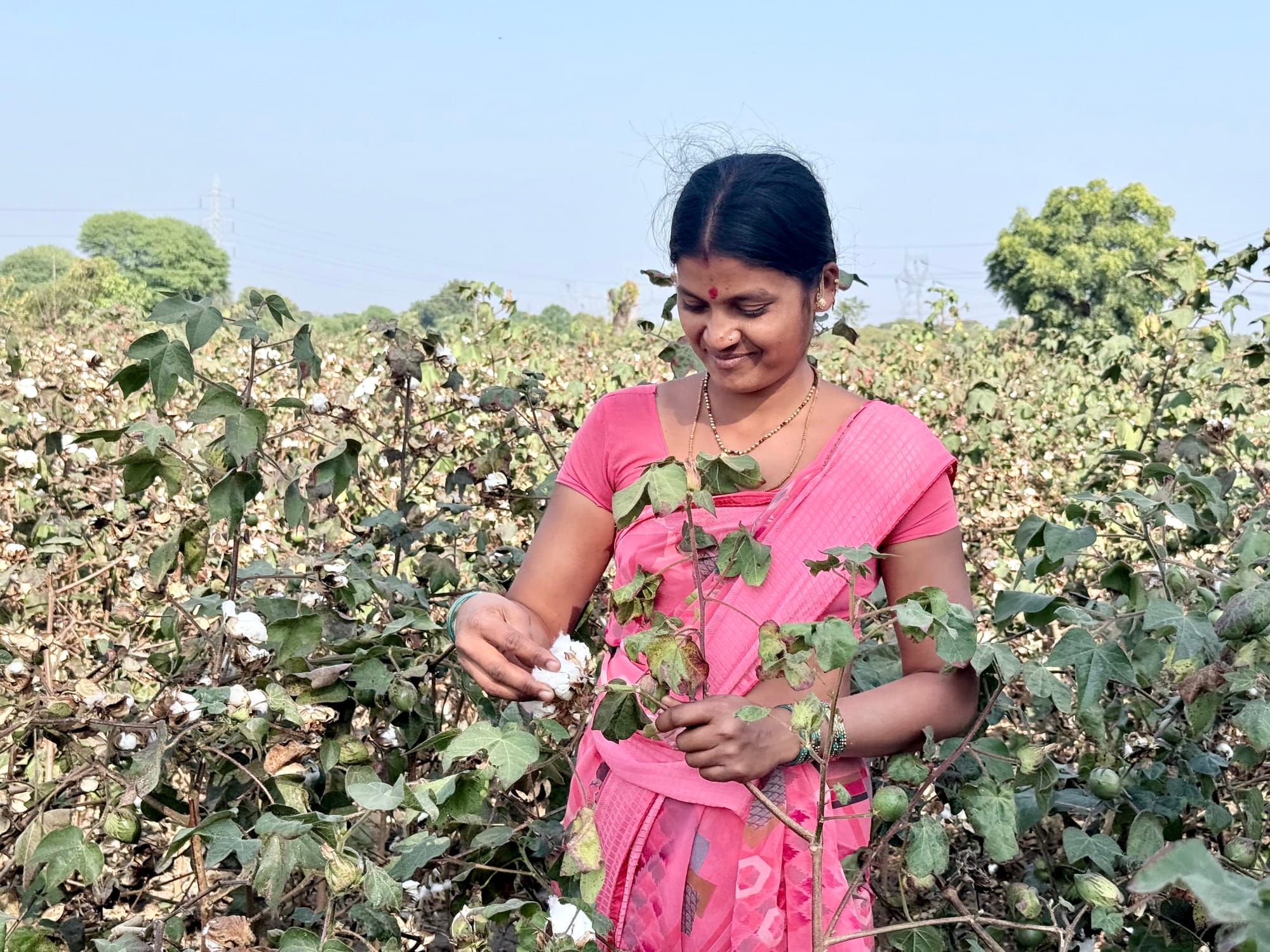
Project Ummeed
Grow Indigo
🇮🇳Project Ummeed · Regenerative agriculture in Maharashtra and Gujarat, under VM0042 version 2.0, ahead of its first issuance
Registry :Verra VCS · VCS 4574 (Project Ummeed)
WHERE
Maharashtra and Gujarat, western India
The two states of the grouped project: twelve districts of Maharashtra and ten of Gujarat in the first project activity instance.
WHAT YOU ARE SUPPORTING
Why this project exists
Maharashtra and Gujarat are two large agricultural states, largely semi-arid, where water management decides the harvest. Conventional practices rely on high chemical input, intensive tillage and the burning of crop residue: depleted soils and greenhouse gas emissions.
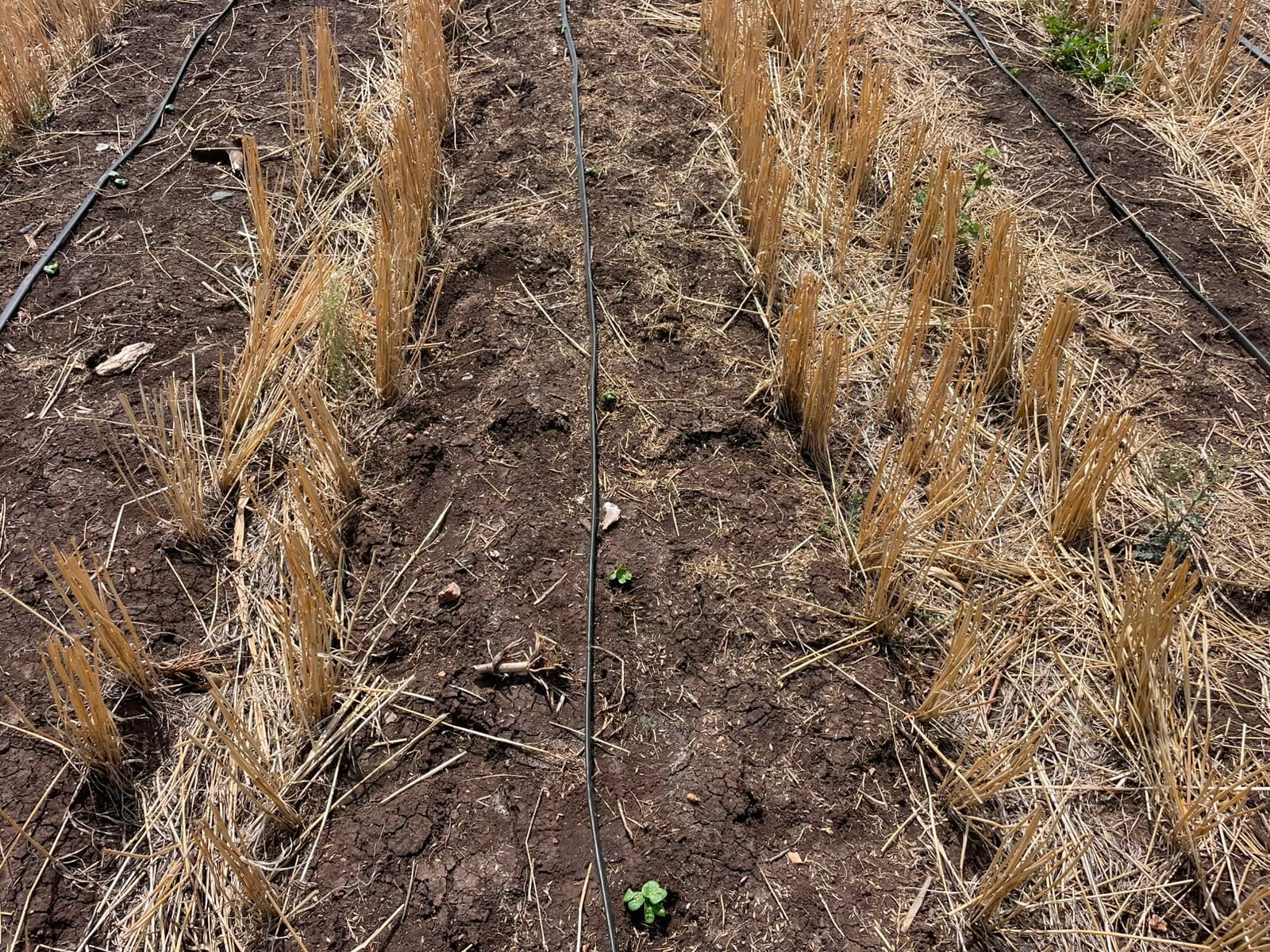
Fertigation, reduced tillage and crop residue management with the avoidance of burning: the project's farmers adopt one or more of these practices. They cut nitrous oxide emissions and store carbon in the soil. The carbon credit pays for them, and 60% of the carbon sales go to the farmers.
95,000
fields enrolled in the first instance, over about 125,000 hectares
Project description VCS 4574 v1.7 · 2026-02-19369,451
tCO₂e a year on average over twenty years, ex ante
Project description VCS 4574 v1.7 · 2026-02-19- Fertigation
- Water-soluble fertiliser is delivered through the drip irrigation system, close to the roots. The project document cites nutrient absorption of up to 90%, against 10 to 40% with broadcast application.
- Reduced tillage
- Fewer passes of the plough: less soil carbon lost to mineralisation, better soil structure, more water retained.
- Crop residue management
- Crop residue stays in the field and is no longer burnt: more carbon brought to the soil, less erosion.
- Training and support
- 70 field agents, awareness campaigns, training with local experts, and the carbon income as the incentive.
Why a buyer commits
Removal and reduction
VM0042 version 2.0 quantifies the change in soil carbon stock apart from the avoided emissions. The project document expects both, removals in the majority from 2023.
Same model as Project Aadi
Digital enrolment of the fields, satellite monitoring, soil sampling, validation by RINA S.p.A. over the period 10 May 2020 to 30 April 2024.
The programme in brief
Grow Indigo Private Ltd, founded in 2018 and based in Mumbai, runs Project Ummeed (VCS 4574), the 'Maharashtra and Gujarat Initiative for Regenerative Agriculture and Income Creation', registered with Verra under VM0042 version 2.0 as a grouped project. Started on 10 May 2020 for a twenty-year crediting period, its first instance covers about 125,000 hectares and 95,000 fields, in twelve districts of Maharashtra and ten of Gujarat. Farmers adopt one or more practices: fertigation, reduced tillage, crop residue management with the avoidance of crop burning. The project document estimates 369,451 tCO₂e a year on average over twenty years and sets 60% of the carbon sales for the farmers. Validation was carried out by RINA S.p.A. over the period 10 May 2020 to 30 April 2024. The first issuance is expected by June 2027: 2,365,045 credits over the 2020 to 2025 vintages, of which 1,396,350 reductions and 968,695 removals.
2,365,045
Credits expected, first issuance
2020 to 2025 vintages, issuance expected by June 2027 · Grow Indigo
about 200,000
Annual credit generation capacity
At current scale · Grow Indigo
Verra VCS
Standards
125,000 ha
Area of the first project activity instance
About 125,000 hectares and 95,000 fields · project description VCS 4574 v1.7, 19 February 2026
The programme's credits on the registry, by vintage
| Vintage | Removals expected | Reductions expected |
|---|---|---|
| 2020 | 25,159 | 137,314 |
| 2021 | 97,453 | 224,938 |
| 2022 | 162,532 | 223,876 |
| 2023 | 332,446 | 298,581 |
| 2024 | 282,631 | 380,211 |
| 2025 | 68,474 | 131,430 |
| Total | 968,695 | 1,396,350 |
Registry totals, across all account holders. Source: Verra Registry, VCS 4574, 13 October 2026. Removals and reductions expected : First issuance, 2020 to 2025 vintages, expected by June 2027: 1,396,350 reduction credits and 968,695 removal credits, quantified separately · Grow Indigo.
What you are buying
Methodology and measurement, in detail
Verra VM0042 v2.0, Improved Agricultural Land Management View the spec
Reporting by monitoring period · verification by a Verra-accredited VVB
The same model as Project Aadi, under VM0042 version 2.0:
- Geotagged field records through the developer's app.
- Satellite monitoring of fields, crops and practices.
- Soil sampling stratified by soil type, crop and practice.
- Quantification through the methodology's approaches 2 and 3 (measured and default values).
Validation by RINA S.p.A. over the period 10 May 2020 to 30 April 2024. No credit issued to date.
What sets Project Ummeed apart
VM0042 version 2.0 from registration
Registered with Verra under version 2.0 of the methodology, which quantifies soil removals apart from the avoided emissions.
Pre-rating score of “A” by BeZero Carbon
The scale of the project
About 125,000 hectares and 95,000 fields in the first instance, 369,451 tCO₂e a year on average expected over twenty years.
60% of the carbon sales to farmers
The project's incentive, with training by field agents and awareness campaigns.
Project snapshots
Reserve credits from this portfolio
Let us know your interest and we'll get back to you to structure your purchase.