Recognised programme and registry
The project is registered under a credible standard with a verifiable public registry entry.

ABOUT
Here is the reasoning that guides Arka: why soil carbon matters, why the market is not yet funding it at the level of its potential, and what we do to close that gap
To stay on a 1.5°C pathway, the IPCC estimates the world will need net removals on the order of 5 to 15 GtCO₂ per year by 2050. That is the scale of the market to build: not an opportunity, an equation to close.
SourceIPCC AR6 WG3 (en)
Inside that equation, soils are not a detail. The IPCC sizes the potential of improved agricultural practices at 0.4 to 2.5 GtCO₂ per year, that is 4 to 25% of the total need. Soils store more carbon than all vegetation and the atmosphere combined. They are one of the pillars of the climate response, in proportion to their mass.
SourceIPCC SRCCL (en)

Yet our own analysis of the voluntary market, which tracks credit retirements across public registries, shows that soil and agriculture credits remain a marginal share of total volume. The gap between what soil can deliver (4 to 25%) and what the market funds today (less than 1%) is precisely what justifies a specialised marketplace.
SourceArka, VCM market data (en)
Humans respond to incentives. To move soil carbon from a marginal share to a real pillar of the removal market, two dynamics are converging.
On the constraint side: the convergence of integrity and reporting frameworks (ICVCM Core Carbon Principles, VCMI Claims Code, SBTi BVCM, ESRS E1-7 under CSRD, the EU CRCF) forces the institutional buyer to structure documented, verifiable, publicly defensible purchases. The removal market is leaving the grey zone.
On the reward side: on a well-designed regenerative programme, carbon revenues can cover up to 90% of the transition cost, and soil practices that reactivate microbial biology bring yield gains as early as year 2 or 3. The transition pays for itself for the farmer, and that is what makes it durable.
What drew us to this space is not the carbon equation alone. It is what sits behind it. Farmers do some of the most essential work in our society, and some of the hardest. The transition to regenerative practices is a necessary shift that demands commitment, time, and an economic frame that holds up.
Our work is to structure that funding so it lands where it actually transforms: on the parcel, in the soil's biology, in the viability of the farm.
No exposure to a single developer, no conflict of interest. No fund to deploy, no inventory to clear. We work for our clients' impact, not for a stock to sell.
We anchor to recognised standards (SBTi, ICVCM, VCMI, ESRS) and refuse methodological shortcuts. When a project doesn't hold up scientifically, we say so.
Transparent selection criteria, retirements documented on public registries, the economics of each transaction laid out in the attestation letter. Our clients see what we see.
Our sourcing is anchored in Europe, close to where our buyers and their stakeholders operate. Proximity lets our team visit the sites and meet the agronomists, so each credit comes back with a specific farm and a story buyers can share with their teams.
We rely on recognised standards. Our role is to select high-integrity projects and provide buyers with the documentation needed to contribute with confidence.
The project is registered under a credible standard with a verifiable public registry entry.
Operational track record, team expertise, transparency and relationships with farmers or facility operators.
Monitoring, reporting and verification quality beyond minimum standard requirements.
Verified co-benefits and no-harm principle, adapted per project type.
Can buyers use these credits confidently in their reporting, whether in Europe or the United States?
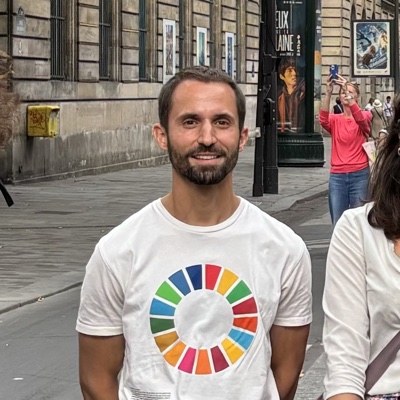
I launched Arka around one conviction: soil carbon removal deserves more visibility and more funding than it gets today. The science says it could carry 4 to 25 percent of the removal effort we need by 2050. The voluntary market is nowhere near that yet, and that gap is what I came here to work on.
What drew me to this space isn't just the carbon equation, it's what sits behind it. Farmers do some of the hardest, most essential work in our society, and the transition to regenerative practices is a real ask: it demands commitment, time, and an economic frame that holds up. When all three line up, the transition pays for itself, and what comes out the other side is carbon removal and better production at the same time.
I am an engineer by training. I spent 14 years in technology ventures in analysis, operations and business development roles, including 8 in the United States. For the past 4 years I have dedicated my time to the voluntary carbon markets: mapping high-integrity projects, understanding certification standards, and building the links between supply and demand so this category can scale.
I see myself as an advocate of an underfunded cause: that of a removal market that lives up to the scale climate science asks for, and to the farmers who make it possible on the ground. At its core, this isn't just a carbon story. It's about funding the people who feed us, so they can farm in a way that is durable, resilient, and restores the land they work on.